What changed when ideas I had studied for years suddenly had a place, a history, and a human scale.
Stoicism Felt Different Standing in Rome
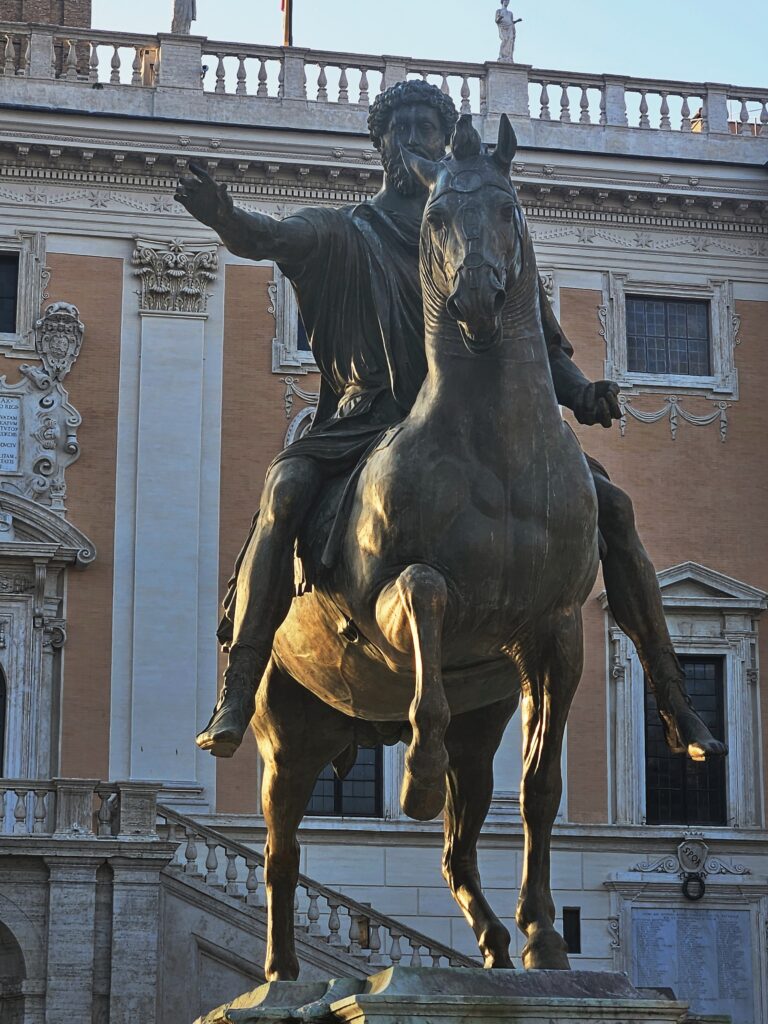
I had read Marcus Aurelius for years before I stood in Rome looking at his equestrian statue. I knew the history, had seen photographs of the statue, and had spent years reading Meditations and trying to apply Stoicism to leadership and my own life. None of what I was seeing was completely unfamiliar.
But there was something different about finally putting a physical place around ideas I had spent so much time thinking about.
Rome has a way of doing that. History isn’t contained in one building or something you only encounter when you decide to visit a museum. It is underneath you and beside you. You walk through streets surrounded by remnants of a civilization that once represented extraordinary power, wealth, influence, and achievement. Things that must have felt permanent to the people living among them are now places we walk through, photograph, study, and try to understand.
Standing there made me think differently about Marcus Aurelius too. The person whose private thoughts I had read so many times wasn’t simply an ancient philosopher whose words survived. He was a person who lived in this place. He dealt with war, illness, politics, family, difficult people, uncertainty, and decisions whose outcomes he couldn’t completely control. He also happened to carry the responsibility of leading an empire while doing it.
Eventually, his time ran out. His authority disappeared. The empire changed and ultimately disappeared too. Nearly two thousand years later, though, we are still reading the reminders he wrote to himself about how he should behave while he had that authority.
That distinction stayed with me.
The Emperor and the Man
There is something imposing about seeing Marcus Aurelius on horseback. That’s part of what an imperial statue was meant to communicate. He wasn’t simply another Roman citizen. He held enormous authority, and the image reflects the position he occupied.
After spending years reading Meditations, though, I find it difficult to see only the emperor. I also see the person behind the position.
That may be one of the reasons his writing has remained useful for so long. Meditations wasn’t written as a leadership book for us. Marcus wasn’t trying to build an audience, develop a personal brand, or convince future generations that he had figured everything out. These were largely reminders to himself. He returned repeatedly to patience, anger, mortality, responsibility, judgment, difficult people, and the need to focus on his own conduct rather than circumstances beyond his control.
There is an interesting contrast in that. Here was someone with an extraordinary amount of external authority who continually returned to the challenge of governing himself.
Leadership has taught me how relevant that distinction still is.
We sometimes assume greater responsibility should somehow make the internal part of leadership easier. A promotion gives us authority, so perhaps we think confidence should naturally follow. We become responsible for more people, so maybe we expect ourselves to have more answers. Other people begin looking to us for direction, and it becomes tempting to believe the title itself has changed something fundamental about us.
It hasn’t.
A title doesn’t automatically make someone more patient. Authority doesn’t remove ego. Responsibility doesn’t eliminate uncertainty. A promotion doesn’t suddenly make difficult conversations comfortable or prevent us from becoming defensive when someone challenges our judgment. If anything, increased responsibility often exposes these things because our decisions now affect more people.
I’ve seen that throughout my own leadership career. The title can change in a day. Developing the person capable of carrying that title takes much longer.
Marcus could command armies and make decisions affecting an empire, but none of that removed his responsibility for his own judgment and conduct. Our circumstances are obviously very different, but the underlying leadership problem remains surprisingly familiar. We still have to decide how we respond when someone disappoints us, challenges us, misunderstands us, or simply doesn’t do what we hoped they would do.
External authority can expand quickly. Self-command has to be practiced.
Rome Has a Way of Putting Achievement in Perspective
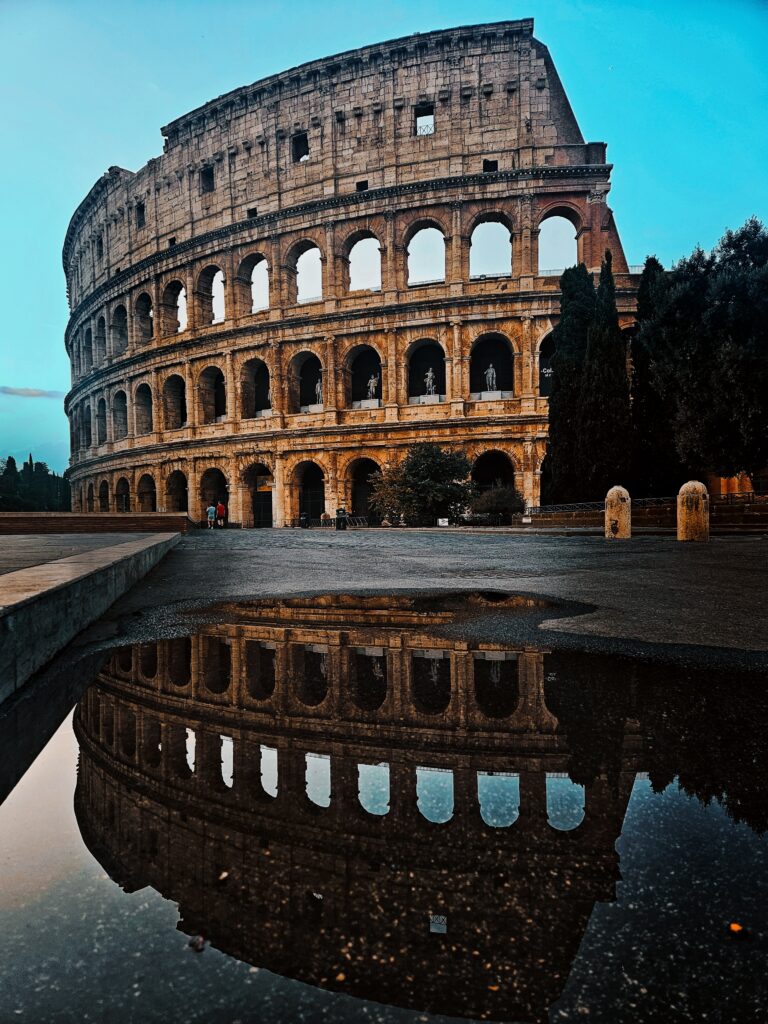
The Colosseum creates a different kind of perspective.
It is difficult to appreciate the scale of it until you are there. Even after centuries of damage, removal, rebuilding, and weather, it remains enormous. It was built for spectacle and crowds and represented engineering, resources, political influence, and the reach of Rome itself. Thousands of people once filled it for events that mattered enormously to the people living at the time.
Today, it is a ruin.
An extraordinary one, certainly. People travel from around the world to see it. But it no longer holds the power or purpose it once did, and the empire responsible for building it is gone.
I don’t look at that and conclude that achievement is meaningless. I care about results. I want teams to succeed. I want organizations to improve, people to grow, and difficult work to produce something worthwhile. Leadership without an expectation of results isn’t much of a leadership philosophy.
But standing around the remains of Rome changes the scale at which you look at achievement.
Think about how much attention we give to things that feel incredibly important right now. A title. A promotion. A quarterly result. A disagreement in a meeting. Recognition for an idea. A decision we want someone else to support. Whether someone gave us enough credit for something we accomplished.
These things can matter. The problem begins when we allow temporary things to carry permanent weight.
Most leadership roles are surprisingly short when viewed across an entire career. Eventually someone else sits in the chair. Someone else runs the meeting. Someone else makes the decisions. The organization changes, the strategy changes, and many of the problems that consumed enormous amounts of our attention eventually disappear.
Rome makes that difficult to ignore. People once walked those streets with more wealth, authority, recognition, and influence than almost anyone alive today. Most of their names have disappeared.
That doesn’t make their lives meaningless. It makes me question what deserves the amount of energy we sometimes give it.
There have been plenty of times in leadership when I’ve wanted my idea to win, wanted an outcome to go a particular way, or felt the pull to hold onto something because my name was attached to it. Those reactions can feel completely reasonable in the moment. Step far enough away from them, though, and the perspective changes.
A disagreement in a Monday meeting looks different when you’re standing among the remains of an empire.
What Actually Outlasts Our Authority
There is a question I kept coming back to as I thought about all of this: if the position is temporary, what are we actually trying to build while we have it?
For me, that question connects directly to leadership development.
A leader can build a team that depends on them for every meaningful decision, or develop people who become increasingly capable of making good decisions themselves. We can solve every recurring problem as it reaches us, or improve the system that keeps producing the problem. We can hold information and authority tightly because being needed feels valuable, or give people the context, expectations, and room they need to develop judgment.
Both approaches can produce results in the short term. They create very different things over time.
Some of the leadership work that lasts the longest is also the least visible. Someone becomes a stronger manager because of conversations that happened over several years. A standard continues to guide decisions after the person who created it has moved on. Someone you coached eventually teaches another person something you once taught them. A team learns how to solve problems without waiting for the leader to walk into the room.
There usually isn’t much recognition attached to those things. Often the better you do them, the less obvious your involvement becomes.
I think that’s one reason the contrast between Marcus Aurelius’s statue and Meditations is so interesting.
The statue represents visible authority. It was meant to be seen. The emperor is elevated above everyone else, sitting on horseback, preserved in bronze.
Meditations represents something almost opposite. Those writings weren’t intended to become the thing millions of people would know him for. They record a person repeatedly trying to correct himself—to be more patient, more disciplined, less distracted by reputation, less controlled by anger, and more accepting of what he couldn’t change.
The authority is gone.
The struggle to govern oneself is still useful.
There is something in that worth carrying into modern leadership. Our dashboards matter. Performance matters. Growth matters. Standards matter. But people are also experiencing how we pursue those things. They notice whether we take responsibility when something goes wrong, whether the standard changes depending on who violated it, whether we give credit away or collect it for ourselves, and whether we have the courage to address something directly instead of allowing discomfort to make the decision for us.
Character isn’t separate from leadership performance. It shapes how performance is achieved and what remains after the leader moves on.
That doesn’t happen in dramatic moments most of the time. It happens on ordinary days through decisions almost no one outside the room will ever know about.
Marcus had ordinary days too. He had people to deal with, decisions to make, frustrations to manage, responsibilities he couldn’t avoid, and circumstances he probably wished were different. His circumstances were larger than ours, but the internal work was remarkably human.
That is the Stoicism I find most useful.
Not philosophy to admire from a distance, but something to practice when the day doesn’t cooperate.
Control Looks Different When You’re Standing Among Ruins
I’ve written before about the Stoic dichotomy of control at work. The distinction is simple enough to understand: some things fall within our choices and actions, while many of the outcomes we care about do not.
Understanding that intellectually and living according to it are two very different things.
Leadership constantly tempts us to cross that line. We prepare carefully and expect the plan to work. We give someone feedback and want them to receive it the way we intended. We develop a person and expect them to make the decision we would have made. We communicate something clearly and become frustrated when someone interprets it differently.
Responsibility can slowly turn into an expectation of control.
Rome provides a fairly large reminder of how limited that control has always been. An empire powerful enough to shape much of the known world still couldn’t arrange the future according to its plans. Emperors dealt with war, disease, political conflict, human behavior, and eventually their own mortality. Whatever control they possessed had limits.
Our problems are smaller, but the distinction hasn’t changed.
As a leader, I can prepare for a difficult conversation. I can make sure I have the facts. I can speak clearly, listen carefully, treat the other person with respect, and have enough courage to say what actually needs to be said. Those things belong to me.
I cannot control how the other person receives the conversation.
That matters because trying to control their reaction can make me worse at the part I actually own. I may soften something that needs clarity because I want them to like the message. I may avoid the conversation because I want to prevent conflict. I may become frustrated when they don’t respond the way I expected.
The same thing happens with decisions. We can gather information, seek different perspectives, challenge our assumptions, and make the best judgment available to us. The outcome can still be different from what we wanted.
Stoicism doesn’t remove responsibility for the outcome. It helps clarify responsibility for the process that produced our decision and our response to what happens next.
I understood that before going to Rome.
Standing among physical reminders that even enormous power was temporary didn’t teach me the principle. It simply made the illusion of control look a little more obvious.
What I Brought Home From Rome
I didn’t come home with five new Stoic lessons.
I’m glad I didn’t.
The ideas I’ve been trying to practice are largely the same ones I carried with me when I left: time is limited, control has boundaries, status is temporary, character requires practice, and our response remains ours even when circumstances don’t cooperate.
What changed was being able to attach those ideas to a place.
When I read Marcus Aurelius now, I can picture the statue and remember that there was a person behind the words. A person who held extraordinary authority and still found it necessary to remind himself how to respond to other people, how to manage his own judgment, and how quickly life passes.
I can picture the Colosseum and the other remnants of a civilization that must have seemed permanent to the people living within it. I can remember that things capable of dominating an age can eventually become something people walk through on vacation two thousand years later.
That perspective doesn’t make the work in front of me feel less important. In some ways, it makes it more important.
If time is limited, I should be more careful about what receives mine. If authority is temporary, I should think harder about how I use it while I have it. If I cannot control every outcome, then the quality of my judgment and response matters even more. And if titles eventually change hands, developing people and building something that continues without me may matter more than being the person everyone depends on today.
I had studied all of those ideas before Rome.
I just hadn’t stood in the middle of their history.
Eventually, every one of us hands the title to someone else. The meetings continue. The organization changes. Many of the decisions that once seemed enormous become stories few people remember.
What remains is harder to measure.
The people we developed. The standards we established. The trust we built or damaged. The decisions we made when doing the right thing was less convenient. The way we used whatever influence we were given while it belonged to us.
Rome didn’t give me a new philosophy.
It gave me a different perspective on how temporary everything around the philosophy really is.