Why Bravery Is Something You Earn
Courage is not something that you already have, like a personality trait such as eye color or height. Most people believe you either possess it or you don’t. That notion seems tidy, but it crumbles the moment life turns real.
In my experience, overcoming adversity works the other way around. Courage isn’t what makes you strong when the hard season begins. Courage is what you earn after you’ve been stretched, embarrassed, scared, tired, and still kept going. It’s the quiet proof you carry that says, “I’ve been here before, and I can handle more than I thought.”
If you’re in a tough stretch right now, I’m not going to tell you to “stay positive.” I’ll tell you something better: fear can be present, and by facing challenges you can still move, fostering personal growth.
Courage isn’t a trait, it’s a receipt you earn
Malcolm Gladwell, in his analysis of David and Goliath, shows how underdogs topple giants by turning apparent weaknesses into strengths. I used to picture brave people as calm, confident types who never second-guess themselves. Then I watched actual brave people up close, facing their own giants. They weren’t fearless. They were willing.
Courage often starts as a clumsy decision, finding the advantage of disadvantage. You show up to the hard conversation with your voice shaking. You admit you’re overwhelmed. You walk into the doctor’s office even though you’d rather not know. You hit “send” on the apology text that makes your stomach drop. That’s not a superhero moment. That’s a regular human choosing action, while fear rides shotgun.
Here’s what tough times do that good times can’t: they correct your exaggerations.
When life is comfortable, the mind can turn simple discomfort into a disaster movie. One awkward meeting becomes “I’m done here.” One setback becomes “I’m behind forever.” The story grows because nothing forces it to stop. Hard seasons interrupt that. They make you deal in facts.
After enough reps, you start to notice a pattern:
- The giant you dreaded was painful, but survivable, revealing your hidden strengths when facing overwhelming odds.
- The worst-case outcome didn’t happen, and even when it did, you adapted to the giant.
- You didn’t break, even if you bent.
That’s the moment courage begins to feel less like a switch and more like a muscle. You don’t wake up with it. You build it, one honest rep at a time.
Stoicism taught me fear is allowed, but my response is mine
Stoicism doesn’t ask me to pretend things are fine. It builds psychological strength by asking me to separate what’s happening from the story I’m attaching to it through a perspective shift.
A Stoic approach starts with a blunt question: What’s under my control right now? Not next month. Not the whole outcome. Right now.
That’s where “control your response” stops being a quote and becomes a practice. I can’t always control power dynamics like loss, layoffs, illness, or other people’s choices that affect our lives. I can control my next sentence, my next step, my next boundary, my next act of effort.
This is where many of us get stuck: we think courage means feeling ready. But readiness is a feeling, and feelings are unreliable. Redefining courage as a behavior changes that.
When I reframe fear as information, it gets easier to work with. Fear tells me what I value. It points to what I don’t want to lose. It highlights where I’m unpracticed. Embracing vulnerability becomes a necessary component of overcoming adversity. None of that is shameful. It’s data.
What helps me most is keeping two truths in the same hand:
- I’m allowed to be afraid.
- I’m still responsible for what I do next.
That combo keeps me grounded. It prevents toxic positivity, and it prevents helplessness.
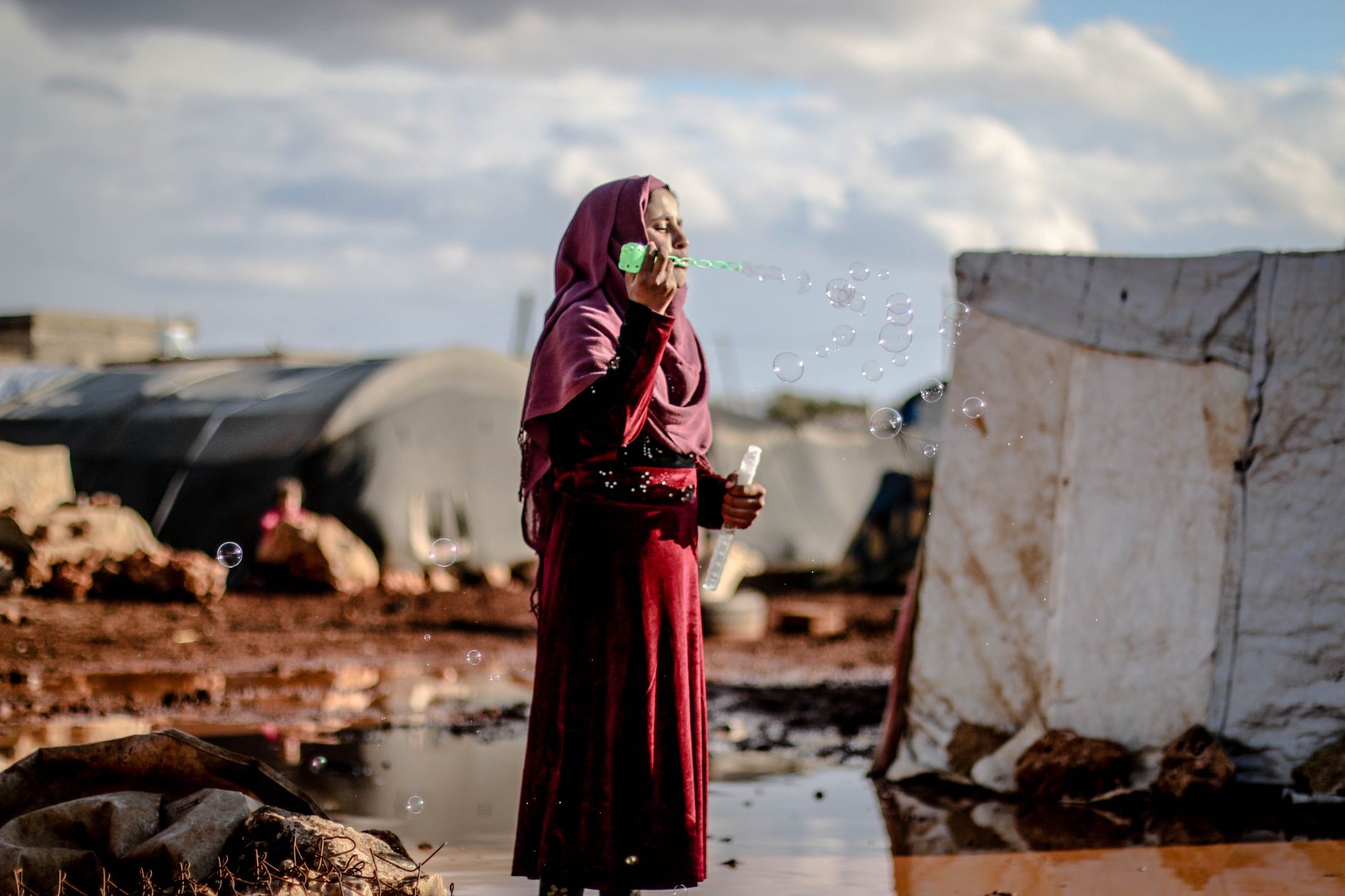
When I see an image like this, it resets my sense of scale. Some people face levels of hardship I can barely imagine while showing resilience in facing challenges. That doesn’t erase my pain, but it reminds me to respect the human capacity to endure, and to stay humble about what “tough” really means.
Courage through adversity shows up in Leadership when it counts
In Leadership, people don’t follow my ideas as much as they follow my emotional tone. If I panic, that panic spreads. If I get quiet and clear, that steadiness spreads too. Courage through adversity emerges as a transformative struggle, one where character development truly occurs. Successful underdogs model this best, leading with steadiness even under pressure.
Courage at work usually looks boring from the outside. It’s not a speech. It’s the choice to be honest when spinning would be easier.
For me, the clearest examples are these:
Owning the miss without self-hate. I can say, “I got this wrong, here’s what I learned, here’s what changes Monday.” That’s courage because it risks my ego. It also builds trust fast.
Holding a boundary with respect. “I can’t approve that timeline. If we do it, quality drops. Here are two options.” A fearful leader bows to the authority of power and tries to please everyone, which ends up stifling progress. A courageous one tells the truth kindly.
Staying present in conflict. When someone’s upset, my instinct is to defend myself. Courage is staying curious instead. “Help me understand what you’re seeing.” Not because I’m weak, but because I’m committed to reality.
Adversity is a rough teacher, but it’s honest. It trains me to stop waiting for perfect conditions. It forces me to practice “small discomforts” so I’m not shocked by the big ones.
A simple 7-day courage practice
This is the plan I use when I can feel myself shrinking during tough times. Keep it small. Keep it repeatable. Write down two lines each day: what I did, and what I learned. Here’s a series of unconventional strategies for building mental toughness against overwhelming odds.
- Day 1: Name the fear. Write one sentence: “I’m afraid that…” Then write one sentence: “What I can control is…”
- Day 2: One hard email or text. Send the message you’ve been avoiding (clear, short, respectful).
- Day 3: Practice a no. Say no to one request that drains you. No excuse, just a simple boundary.
- Day 4: Do a small brave action in public. Ask the question in the meeting. Admit you don’t know. Request feedback.
- Day 5: Choose discomfort on purpose. A tough workout, a cold shower, or a long walk without headphones. Train your “I can handle this” muscle.
- Day 6: Repair something. Apologize, clarify, or clean up a misunderstanding. Keep it about the action, not your identity.
- Day 7: Reflect and reframe. Answer: What wasn’t as tough as I predicted? What did I avoid, and why? What’s my next rep? These reflections often lead to breakthroughs.
If you want to repeat it for two weeks, run the same seven days again, but increase the difficulty by one notch. Not a leap, just a notch.
Conclusion: I don’t find courage, I build it
Courage isn’t what I bring into adversity, it’s what adversity leaves in my hands when I’m battling giants by staying awake through it. Fear can come along for the ride, but it doesn’t get to steer. Acknowledging our sources of weakness is what allows us to build mental toughness and resilience, the primary takeaway of the process. If you’re in a hard chapter, take one clean step today, then another tomorrow. These are the most important life lessons; that’s how courage becomes real, not as a mood, but as a record of who you decided to be.