
You are not a machine.
You are not your habits on repeat.
As Nietzsche saw it, to be human is to have the power to think, choose, and shape a life on purpose. We are not stuck just following our instinct or comfort. We can set a direction and walk toward it, even when the ground hurts.
This is where Discipline, Stoicism, and Leadership all meet. Stoic thinkers talk about controlling what we can. Nietzsche talks about creating meaning instead of waiting for someone to hand it to us. Modern leadership talks about vision and follow-through.
The main idea is simple:
Do not be stubborn about every tiny choice, every fork in the road.
Be stubborn about your long-term vision, the end goal that matters.
When you get that part right, daily choices become lighter, calmer, and much more powerful.
What Nietzsche Really Teaches About Choice, Discipline, and Being Human
Nietzsche looked at people and saw more than survival. He saw that we have this strange power to say, “This is what my life will stand for,” then act in line with that choice.
In plain terms, he believed we can:
- Choose our values
- Give our life a personal meaning
- Shape our future by how we respond to pain and struggle
That is not abstract philosophy. That is daily discipline.
Stoic thinking adds a key reminder. You cannot control the world, only your response. You do not control other people, the economy, or the weather. You do control what, and only you say, what you do, and what you think about.
So this article is not a lecture on Nietzsche. It is a guide to using his ideas, mixed with Stoicism, to make better life and choices. You will see how to think beyond instinct, build daily discipline, and stay focused on the end goal instead of getting stuck at every turn in the road.
We Are Not Robots
A robot runs its code.
You do not have to.
You can pause before you act. You can notice an impulse and still choose something better. That small gap between feeling and action is your real power.
Think of simple examples:
- You want to scroll through your phone at night. You stop, remember your exam, then choose to study for 30 minutes.
- You feel like yelling in a meeting. You pause, take a breath, and decide to listen first, and ask more questions.
Every time you choose on purpose instead of on autopilot, you train that muscle of discipline. Over time, that muscle grows. Saying “no” to one urge or “yes” to one hard task gets a little easier every time.
Stoic wisdom fits right here. You cannot stop people from being rude, but you can stop yourself from copying them. You cannot avoid every problem, but you can control what story you tell yourself about it.
Why Meaning and Values Matter More Than Comfort
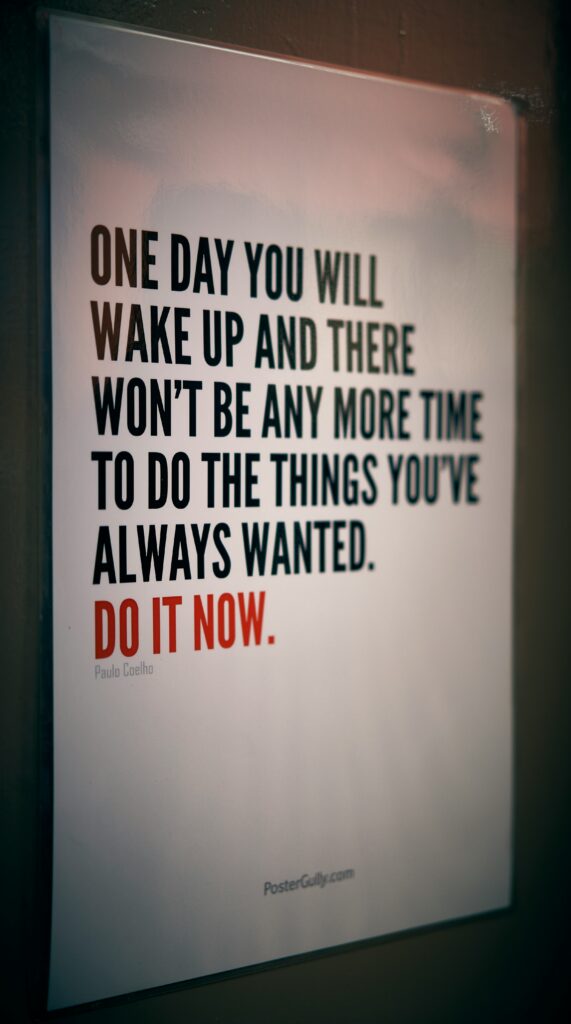
Nietzsche is famous for the idea that a strong “why” helps us carry almost any “how.” When your end goal is clear, pain changes shape. It is not just suffering anymore. It becomes part of the price you pay for something you care about.
If your goal is to be a kind, present parent, waking up at 3 a.m. for a sick child is not just “lost sleep.” It is an act of love.
If your goal is to lead with honesty at work, telling the truth in a hard meeting is not just “awkward.” It is you living your values under pressure.
Stoic thinking agrees. Real strength comes from holding to your values even when it hurts. Fake leaders chase comfort. Real leaders choose the hard right over the easy wrong, like a coach who benches a star player for bad behavior, or a team leader who tells a client the honest timeline, not the flattering one.
Meaning gives you a spine. Comfort only sets you back up to be on the couch.
Be Stubborn About the End Goal, Not Every Fork in the Road
Here is the core idea.
Your main mission is non-negotiable. Your path is flexible.
Life gives you many forks in the road. Different schools, jobs, cities, partners, tactics, tools. If you try to be stubborn about all of them, you stay stressed and stuck.
Instead, you hold one thing tight: who you want to become and what your life should stand for. That is where your stubbornness belongs. Then you treat most daily choices as experiments on the way to that end goal.
This mindset supports discipline, a Stoic attitude, and strong leadership in any setting: work, school, or family.
Clarify Your End Goal: What Are You Really Aiming For?
You cannot be stubborn about your end goal if you do not know what it is.
Try to write your main goal in one short sentence:
- “Be a wise and calm leader.”
- “Build a strong, healthy body and mind.”
- “Lead my team with honesty and courage.”
Keep it simple. You can add detail later. The point is to know your direction so daily choices have context.
You might even add qualities you want in yourself, such as “quiet confidence,” “Discipline, Stoicism, Leadership,” or “patience under stress.” Write your sentence on a card or note app. Read it each morning. Let it shape how you spend your time and how you speak to people.
When your goal is clear, the rest of your life starts to line up around it.
How to Handle Life’s Forks in the Road
Now think of all the small forks. Two job offers. Two study plans. Two different coaches. None of them is perfect. That is ok.
If you know your end goal, you can ask a simple question:
“Does this move me closer to my goal or not?”
That question strips away drama.
Examples:
- You want to grow as a leader. You have two job offers. One pays more, but the other has a mentor who will train you. You might pick the mentor because your end goal is growth, not just money.
- You want better grades and less stress. You see two study plans online. Both seem fine. You pick the one that fits your schedule best and test it for two weeks instead of hunting for the “perfect” one.
- You want more time with your kids. You can work late or say no and log off. Remember your end goal, then pick the option that supports it.
There is rarely only one magic path. Your clarity reduces stress and keeps you moving.
Stubborn Like a Leader: Daily Habits That Protect Your Goal
Big goals die from small daily drift. The habits you set protect where you’re going.
You can try simple practices like:
- A 3-minute morning check-in: read your end goal, pick one action for today.
- A nightly review: ask, “What did I do today that matched my goal?”
- A work rule: “I do the hardest important task first for 30 minutes.”
- A phone rule: “No social media before I complete my key task.”
- A meeting rule: “I listen fully before I respond.”
These habits are not flashy. They are quiet and strong. They build discipline and support Stoic ideas like accepting discomfort, focusing on what you can control, and staying calm when life gets noisy.
Over time, these small choices create something big: real leadership in how you study, work, and live.
Calm, Disciplined Leadership in Real Life
So, how does all this look in an ordinary day?
You wake up, remember that your life is yours to shape, not just something that happens to you. You review your end goal. You set one key action. You accept that there will be problems, and you decide to control your response.
Nietzsche’s focus on meaning meets Stoic calm in these tiny moments. You are not perfect. You slip, you forget, you react. That is part of being human.
What matters is that you return to your end goal again and again. That return is its own form of strength. People start to feel it when they work with you or live with you. They see someone who is steady, not because life is easy, but because the inside is clear.
Using Discipline and Stoic Thinking When Things Go Wrong
Plans break. People disappoint you. You disappoint yourself.
When that happens, you can use a simple process:
- Pause and breathe. Do not answer or act right away.
- Remember your end goal. Who are you trying to become?
- Ask, “What is still in my control right now?”
- Take one small next step that matches your goal.
Nietzsche would say that struggle can shape you into something stronger if you let it. Stoic thinking says the same. A lost deal can grow your patience. A failed exam can grow your focus. A rough argument can grow your honesty.
Leadership is not about never falling. It is about how you stand back up, after you get knocked down.
Leading Yourself First, Then Others
Real leadership always starts at home, inside your own mind.
If you cannot manage your thoughts, choices, and habits, why should anyone trust you to manage a team or a family? People follow what they feel in you, not just what they hear from you.
Picture:
- A student who keeps their word on group work and stays calm during stress.
- A new manager who admits mistakes, learns out loud, and gives clear directions.
- A parent who owns their temper, says “I was wrong,” and keeps showing up.
All of them are leading themselves first. They are stubborn about who they want to become, but loose about the small details of how they get there.
That is the heart of this idea: hold tight to your end goal, keep a light grip on the path.
Choose Your End Goal, Then Walk Toward It
You are not a robot. You can think, choose, and shape your life with intention. Nietzsche reminds you to create meaning; Stoicism reminds you to control your response; modern leadership reminds you to serve something larger than comfort.
When you connect these, you get a simple rule: be stubborn about your end goal, not about every fork in the road. Return to your vision when you fail, when plans change, and when fear hits. Let your “why” carry you through small discomforts.